

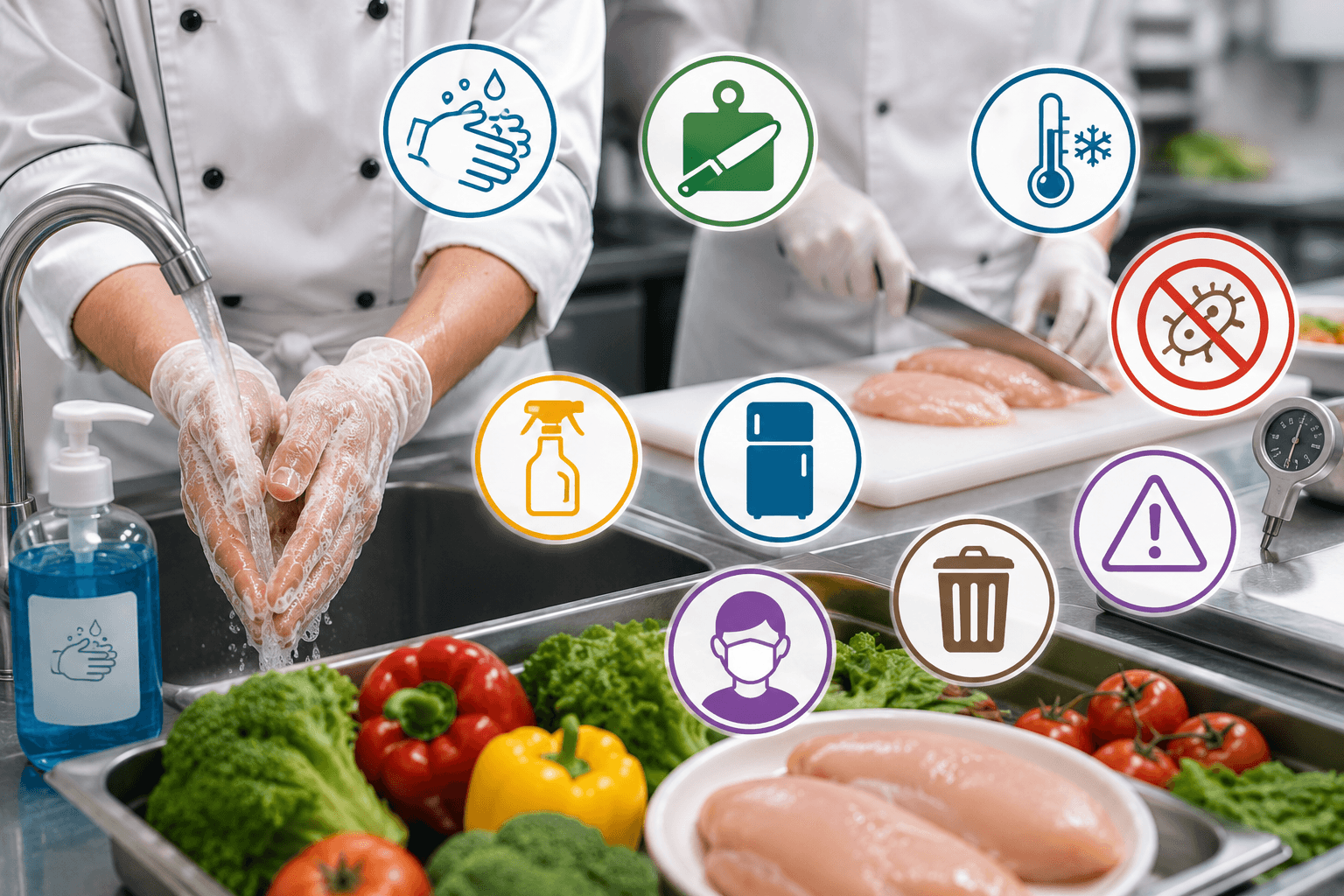
Hygiene 2026 — Common Mistakes When Handling Food That Can Lead to Food Contamination and Infection Risks
Most food safety problems do not occur because of complex reasons. They often begin with seemingly small mistakes — improper handwashing, poor temperature control, cross-contamination, or incorrect food storage.
If bacteria, viruses, allergens, or other unwanted contaminants enter food products, they can create serious health risks.
That is exactly why hygiene training and food hygiene tests in Germany place strong emphasis on practical work situations and real-life risks.
Why Is Food Hygiene So Important?
Food safety directly affects people's health.
- food contamination
- transmission of bacteria and viruses
- spread of infections
- food poisoning
- illness among customers or patients
- damage to a company’s reputation
That is why Germany has strict hygiene regulations and requirements under the Infektionsschutzgesetz (IfSG).
1. Improper Handwashing
One of the most common problems is poor hand hygiene.
- bacteria
- viruses
- allergens
- contaminants to food products
It is especially important to wash your hands:
- before starting work
- after using the restroom
- after handling raw meat
- after coughing or sneezing
- after touching waste or garbage
2. Cross-Contamination
Cross-contamination occurs when bacteria or other contaminants are transferred from one product to another.
- using the same knives for different products
- using the same work surface for raw meat and ready-to-eat food
- insufficiently cleaned cutting boards
- improper product storage
Safe practices:
- use separate tools and equipment
- disinfect work surfaces regularly
- keep raw and ready-to-eat foods separate
3. Improper Temperature Control and the Danger Zone
Temperature control is one of the most important principles of food safety.
Food should not remain in the so-called danger zone for long periods of time.
+7°C to +63°C
- keep cold products properly refrigerated
- keep hot foods sufficiently hot
- monitor temperatures regularly
4. Cleaning and Disinfection
Many people confuse cleaning with disinfection.
Cleaning helps remove visible dirt and contamination.
Disinfection helps reduce the number of microorganisms.
- work surfaces
- knives
- cutting boards
- refrigerators
- equipment
- handles and other frequently touched surfaces
5. Ignoring Allergens
Allergens are among the most important food safety topics. Even a very small amount of an allergen can cause serious health reactions.
- incorrect labeling
- mixing products
- insufficiently cleaned equipment
- providing incorrect customer information
6. Ignoring Symptoms of Illness
Employees should not work with food if there is a risk of spreading infections.
- vomiting
- diarrhea
- symptoms of infection
- certain infectious diseases
7. Improper Food Storage
- bacterial growth
- food contamination
- product spoilage
Important principles:
- follow temperature requirements
- label products correctly
- monitor expiration dates
- separate different types of products
Frequently Asked Questions (FAQ)
Is the hygiene test in Germany difficult?
For most people, the test feels relatively simple if the main hygiene principles are understood.
Is a hygiene certificate mandatory in Germany?
If you work with food, many professions require training according to §43 IfSG requirements.
How much does a hygiene test cost in Germany?
The cost is usually around €20–50 depending on the city and institution.
What is HACCP?
HACCP is a food safety system designed to identify and control risks throughout the food chain.
Related Hygiene Topics
- HACCP
- Food Safety
- Cross-Contamination
- Microbiology
- Allergens
- Hand Disinfection
- Temperature Control
- Infektionsschutzgesetz (IfSG)
- Workplace Safety
- Food Storage
Learn step by step and practice food hygiene questions, workplace situations, and professional German terminology so you can feel confident both during tests and in real work environments in Germany.
Related practice
Continue with the learning pages and games connected to this article.