

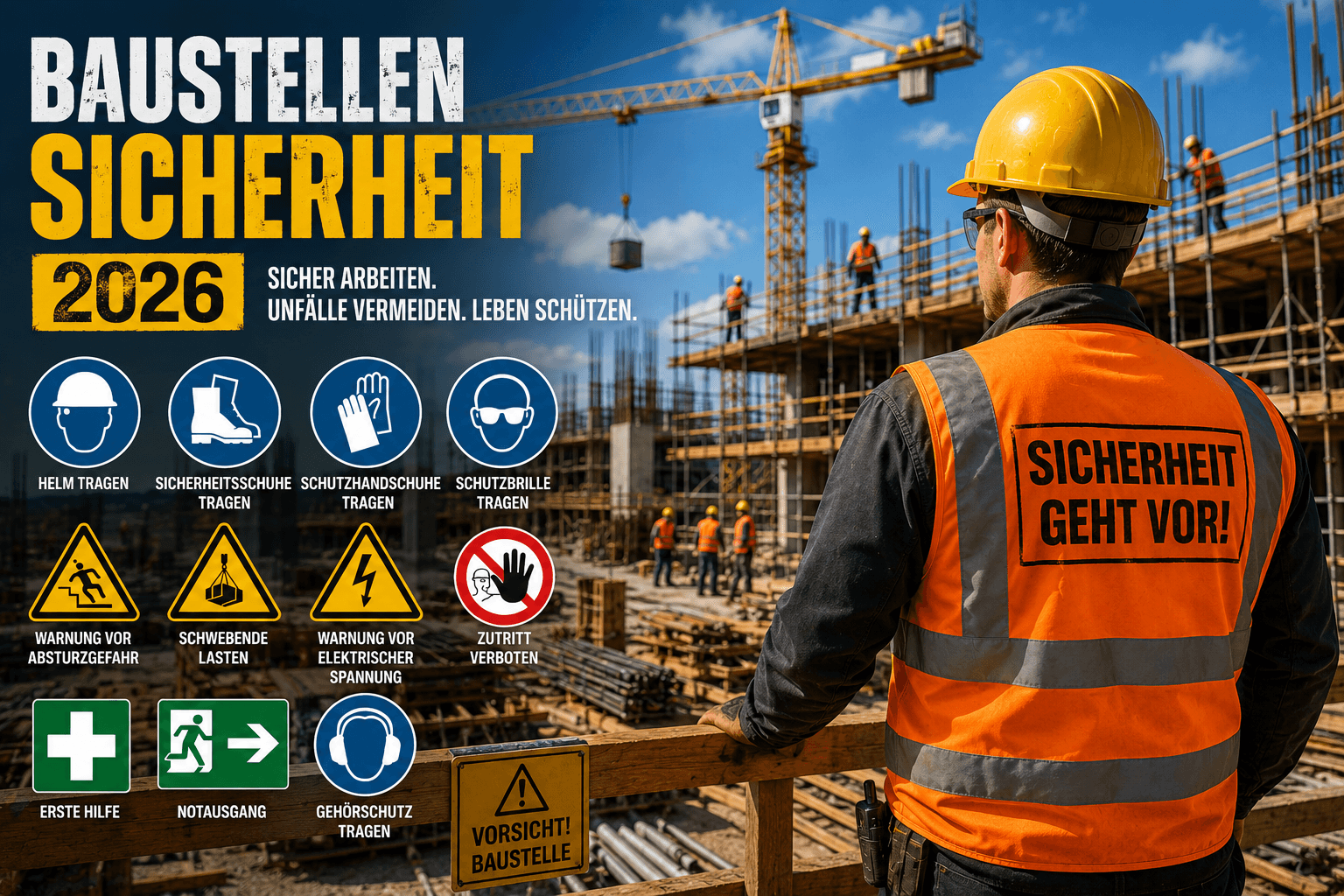
Construction Site Safety in Germany (2026) — Workplace Safety, Risks, Accidents and Occupational Health Protection
Construction is one of the most physically demanding and potentially dangerous industries in Germany. Every year, workplace accidents occur on construction sites, often caused by rushing, lack of attention, or failure to follow safety regulations.
For this reason, workplace safety (Arbeitssicherheit) is one of the highest priorities on German construction sites.
In this article, you will learn:
- the most common risks on construction sites;
- which protective equipment is used in Germany;
- how to prevent workplace accidents;
- the mistakes new workers make most often;
- why following safety regulations is so important.
Why Is Construction Site Safety So Important?
Many different activities take place simultaneously on construction sites:
- materials are being transported;
- machinery is operating;
- power tools are being used;
- employees work at heights;
- excavation and earthworks are performed.
Even a small mistake can result in a serious accident. That is why occupational safety regulations in Germany are much stricter than many people initially expect.
The Most Common Construction Site Hazards
Falls From Height
Falls are one of the leading causes of serious injuries in the construction industry.
Common risks include:
- ladders;
- scaffolding;
- roofs;
- work platforms;
- improperly secured work areas.
Even a relatively low fall can cause severe injuries.
Falling Objects
Construction sites regularly involve the movement of:
- tools;
- building materials;
- metal components;
- concrete elements.
This is why wearing a safety helmet is not just a formality—it is essential protection.
Working Around Machinery
Many construction projects use:
- excavators;
- forklifts;
- cranes;
- lifting platforms;
- trucks.
Workers should always maintain a safe distance from moving equipment and vehicles.
Electrical Hazards
Construction sites often contain:
- temporary electrical connections;
- extension cords;
- power tools;
- unfinished electrical installations.
Working near electricity always requires extra caution.
Dust and Noise
Long-term exposure to dust and noise can cause serious health problems.
Common risks include:
- respiratory diseases;
- hearing damage;
- eye irritation.
Some jobs require respiratory protection and hearing protection equipment.
Personal Protective Equipment on Construction Sites
On most German construction sites, the use of Personal Protective Equipment (PPE) is mandatory. In Germany, this is often referred to as PSA — Persönliche Schutzausrüstung.
Essential Protective Equipment
| Protective Equipment | Purpose |
|---|---|
| Safety Helmet | Head protection |
| Safety Boots | Foot protection |
| Protective Gloves | Hand protection |
| Safety Glasses | Eye protection |
| Hearing Protection | Noise protection |
| High-Visibility Clothing | Improved visibility |
The employer usually provides the required protective equipment.
Common Safety Signs on Construction Sites
Construction sites contain various safety signs and warning notices. Understanding them helps reduce risks and prevent accidents.
| Safety Sign | Meaning |
|---|---|
| Helm tragen | Safety helmet required |
| Schutzbrille tragen | Safety glasses required |
| Sicherheitsschuhe tragen | Safety boots required |
| Gehörschutz tragen | Hearing protection required |
| Zutritt verboten | No entry |
| Warnung vor Absturzgefahr | Fall hazard |
| Erste Hilfe | First aid station |
| Notausgang | Emergency exit |
Safety Rules to Follow Every Day
Before Starting Work
Make sure that:
- your protective equipment is in good condition;
- the work area is safe;
- tools are not damaged;
- you understand your task.
During Work
Important safety principles:
- do not rush;
- stay within your area of competence;
- respect barriers and restricted zones;
- pay attention to moving machinery;
- report hazards immediately.
After Work
- clean and organize the work area;
- store tools safely;
- report damaged equipment;
- inform supervisors about identified hazards.
Quick Safety Checklist Before Starting Work
Before beginning work, perform a short safety inspection.
- ☐ Is your safety helmet fitted correctly?
- ☐ Are your safety boots in good condition?
- ☐ Is the work area safe?
- ☐ Are all tools undamaged?
- ☐ Do you understand your work assignment?
- ☐ Do you know where the first aid equipment is located?
- ☐ Do you know the evacuation routes?
A few minutes spent checking safety can prevent serious accidents.
Near Miss — A Potential Accident That Almost Happened
Many serious workplace accidents begin with situations where “nothing happened only because of luck.”
Examples include:
- a falling object that narrowly misses a worker;
- an almost collision with machinery;
- an unstable structure;
- a damaged ladder.
These situations should always be reported immediately. In workplace safety terminology, this is known as a Near Miss incident.
Who Is Responsible for Safety on a Construction Site?
Workplace safety is not only the employer’s responsibility.
A safe working environment depends on:
- the employer;
- site management;
- supervisors and foremen;
- machine operators;
- every individual worker.
If a dangerous situation is identified, it should be reported immediately. Many accidents can be prevented before they happen.
The Most Common Mistakes Made by New Workers
Ignoring Safety Requirements
Many accidents happen because people think: “It won't happen to me.”
Rushing the Job
Trying to complete work faster often leads to mistakes. Safe work is almost always faster than dealing with the consequences of an accident.
Incorrect Use of Tools
Every tool is designed for a specific purpose. Improvisation on a construction site often creates additional risks.
Not Asking Questions
If something is unclear, ask. It is far safer than guessing.
What to Do and What Not to Do on a Construction Site
| Do | Don't |
|---|---|
| Wear protective equipment | Work without a helmet or safety boots |
| Report hazards | Ignore dangerous situations |
| Ask questions | Guess or improvise |
| Respect barriers and restricted areas | Enter prohibited zones |
| Use the correct tools | Use damaged equipment |
| Follow safety instructions | Work carelessly or in a rush |
What Should You Do in the Event of an Accident?
The most important steps are:
- Ensure your own safety.
- Stop or secure the dangerous situation.
- Call for help.
- Provide first aid if it is safe to do so.
- Inform the responsible supervisor.
Germany's emergency number is:
112
First Aid on Construction Sites
Basic first aid knowledge is valuable for every construction worker.
Common construction site injuries include:
- falls;
- cuts;
- bleeding;
- bruises;
- burns;
- electrical injuries.
For this reason, many employers highly value employees who have completed a First Aid Course (Erste Hilfe).
How Does German Language Knowledge Improve Safety?
Many instructions and warnings on construction sites are written in German.
Workers should be able to understand:
- safety signs;
- work instructions;
- directions from machine operators;
- evacuation procedures.
Better German language skills often contribute to safer working conditions.
Next Steps for Construction Workers in Germany
If you plan to work in the German construction industry, it is helpful to develop not only technical skills but also:
- workplace safety knowledge;
- basic first aid skills;
- job-related German language skills;
- understanding of German workplace regulations.
Which Skills Are Most Valuable for Construction Workers in Germany?
In addition to technical qualifications, employers often look for other competencies.
Particularly valuable skills include:
- occupational safety knowledge;
- basic first aid training;
- German for work;
- understanding construction site regulations;
- teamwork and communication skills.
These abilities help workers not only stay safer but also build more successful careers in Germany.
How Deutsch mit Spaß Can Help
On the Deutsch mit Spaß platform, you can learn professional German vocabulary, practice industry terminology, and use interactive games and tests designed to prepare you for real workplace situations.
With Deutsch mit Spaß, you can:
- learn professional terminology;
- use educational games;
- practice with tests;
- collect points and track your progress;
- explore related learning topics.
Related Topics
- Construction Jobs in Germany
- First Aid (Erste Hilfe)
- Forklift License (Staplerschein)
- Warehouse Work in Germany
- Hygiene Training
Conclusion
Construction site safety in Germany is not a formality—it is an essential part of everyday work.
Proper use of protective equipment, compliance with safety regulations, attention to hazards, and willingness to report risks help prevent accidents and protect the health of both workers and their colleagues.
Related practice
Continue with the learning pages and games connected to this article.